
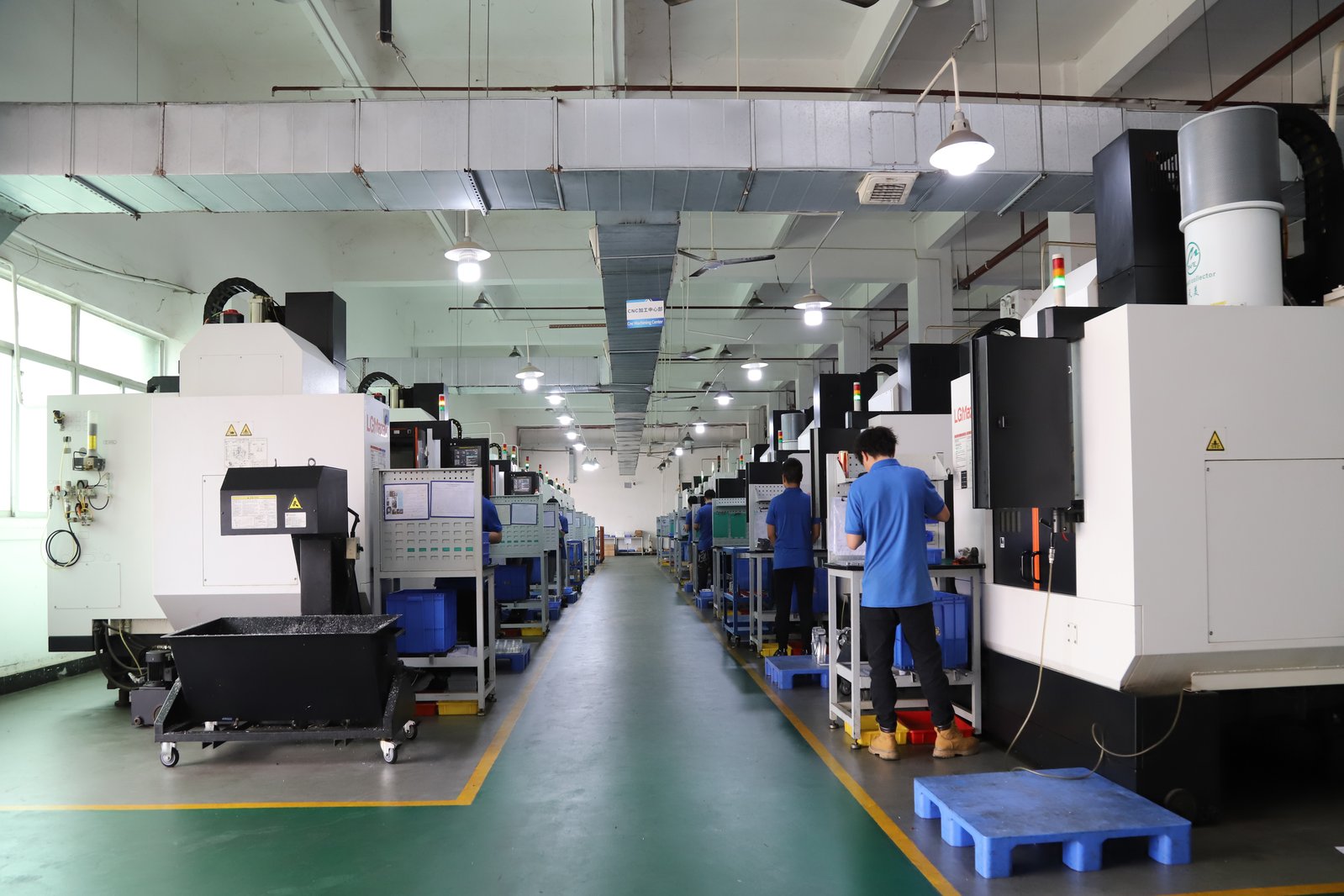
When a factory quotes you a lead time, it is reading you the schedule of your part through its operation: the days your order spends waiting for a free machine, the hours of setup before the first part, the cutting time itself, and the inspection gate before the parts leave. Most of that calendar is waiting, not cutting, and the waiting is where the date actually goes. A buyer who understands the factory calendar can ask the questions that matter, compress the parts of the schedule that can be compressed, and build a plan that does not confuse machining time with lead time. This guide reads the factory calendar of a CNC machining order the way the factory's scheduler reads it — machine by machine, gate by gate — and turns that reading into a schedule you can promise and keep.
Why is a factory lead time a calendar rather than a countdown?
A machining order is cut for a fraction of the days it occupies, and the gap between the cutting time and the calendar is the factory's internal life: the queue at the machine, the batch that has to fill before a run is economical, the inspection slot that opens when the inspector is free, the finishing vendor's weekly cycle, the packing day before the freight is booked. Each waiting step is real and each has its own calendar, so the lead time is the sum of many calendars rather than the duration of one process. The buyer who quotes their own customer a date needs to know which parts of that sum are fixed and which are negotiable, and the factory that opens its calendar is the factory whose dates you can trust.
Reading the calendar also changes the questions worth asking. "How long does machining take" is the wrong question; the right ones are "when does the machine class that runs my part have a free window," "how long is the current queue on that machine class," and "which gates between the machine and the shipping dock add days to my order." The factory that can answer those questions has read its own calendar; one that answers with a standard lead time has quoted you its hope rather than its schedule. The calendar reading is the difference between negotiating a date and understanding one.
What should you ask about the machine that will run your part?
The first calendar question is which machine runs the part and how that machine's week looks. Ask for the machine class and its current load: how many jobs are ahead of yours, what the average job duration is, and when a window would open for your order. A factory that quotes a date without naming the machine has not placed your order in its calendar; one that names the machine and its load is quoting you the real position of your work in the queue. Ask how the load on that machine class moves — whether the week is already booked, whether overtime is possible, and what the factory's rule is when two customers need the same window.
The machine question also covers the setup reality. Every job on a machining center pays a setup cost before the first part is cut — the fixture, the program, the tooling, the first article — and the setup window is part of the calendar. Ask how long the setup for your part will take and when it is scheduled, because a factory that batches setups on certain days may add a setup wait that has nothing to do with your geometry. A buyer who knows the setup time and its place in the calendar knows whether the quoted date includes a real setup window or assumes the machine is already running your program.
How do batches and minimums shape the factory calendar?
Factories schedule by batch, and the batch logic decides where your order sits in the calendar. Ask whether your quantity fills a batch on its own or waits to be grouped with other work sharing the same material, setup or machine, and what the factory's batch-fill rule is. An order that waits for a batch to fill is an order whose date is written by the batch logic rather than by the cutting time, and the buyer who knows the rule knows why the date is what it is. Ask whether a smaller quantity would slip into an existing batch sooner or pay the setup alone, because the economics and the calendar of the batch move together.
The batch question also runs through the finishing and treatment steps, which are the classic batch-driven parts of the calendar. An anodize run, a heat-treat cycle and a plating batch each operate on their own weekly or daily cadence, and a part that misses the window waits for the next one, not for the next day. Ask what cadence each downstream process runs on and where your part sits in it, and ask whether the finishing can be scheduled to overlap the machining rather than follow it. The buyer who plans the part's calendar through its batch gates is the buyer who is not surprised by the week the parts waited for a coating run.
What inspection and documentation gates add days before shipping?
The inspection gate sits between the machine and the shipping dock, and it costs calendar days that the cutting time never shows. Ask when the inspection of your parts is scheduled, how long it takes for the quantity you ordered, and what the inspection plan covers — a first-article review, a sampling plan, or full measurement of the critical features. A factory whose inspection slot is booked days ahead adds those days to your lead time whether your parts are ready or not, and a buyer who asks when the inspection window opens can plan the shipping date around the real gate. The inspection gate is also where the first-article delay happens, so ask how a first article that needs a re-cut is re-scheduled into the machine's calendar.
The documentation is part of the gate. The dimensional report, the material certificate and the conformance certificate are produced around the inspection, and a factory that generates them on a schedule adds that schedule to your date. Ask what the documentation turnaround is and whether the package ships with the parts or behind them, because a shipment that leaves without its documents is a shipment that arrives without its proof. The buyer who plans the documentation gate into the calendar is the buyer who receives parts and certificates together rather than chasing the report across the ocean afterward.
How do material and stock decisions compress the calendar?
The single fastest way to compress a factory calendar is to remove the material wait, because material sourcing sits entirely before machining and adds its own lead time to every order that does not start from stock. Ask which materials the factory holds in stock for your grade and form, and whether your order can start cutting the day it is released rather than the day the material arrives. A factory that stocks the aluminum or the stainless your drawing calls out has removed one calendar from your order; one that must buy the bar from a mill is quoting you the mill's schedule plus its own. Ask what the material availability is before you accept the date, and where a repeat program is running, consider ordering the material ahead of the drawing finalization to take the material calendar off the critical path.
The stock decision also runs through the blanks and the pre-work. A part that starts from a sawn blank or a pre-machined slug has a shorter material story than one that starts from a full bar needing the bar-prep step, and a factory that prepares its blanks ahead of the machine queue has decoupled the prep calendar from the machining calendar. Ask how the material is prepared for your part and where the prep sits in the schedule, because the prep step is a calendar of its own that can hide inside a quoted lead time. The buyer who sees the material calendar can usually shorten it by asking the right stock question before the order is placed.
How do drawing revisions and approvals move the calendar?
Every revision and every approval that travels between you and the factory sits somewhere in the calendar, and the travel time is real. Ask what happens to the schedule when the drawing changes after the order: which operations restart, what the new setup window looks like, and how the change is priced and scheduled. A drawing revision can push a part out of its machine window entirely — the window that was reserved is gone, and the part goes back into the queue at the new geometry. Ask how the factory protects the schedule against revisions and how it communicates the impact before the change is approved, because a revision approved in writing with its schedule cost stated is a managed event, and one absorbed silently is a delay discovered at the ship date.
The approval gates between you and the factory deserve the same attention. If your quality system requires a first-article approval before production runs, the approval travel time — the report sent, the review done, the release given — is calendar time, and it belongs in the plan rather than after it. Ask how approvals are transmitted and how fast the factory moves when the release arrives, and where you can shorten the loop — pre-approved features, agreed acceptance criteria, a video review instead of a sample shipment. The buyer who treats its own approvals as part of the calendar is the buyer who does not blame the factory for a delay its own inbox created.
Which tolerance and process choices shorten or lengthen the schedule?
The capability band of a serious machining factory — ±0.003 mm on milled and turned features and ±0.002 mm on precision ground surfaces, with Ppk ≥ 1.67 at the initial study on key characteristics and Cpk ≥ 1.33 on general characteristics. Capability is reported per characteristic: every report names the feature, its tolerance band, the sample size, the sigma method, and the study window. — is a promise about the process, and the process choices behind the band carry schedule weight. A feature that needs the grinding band adds an operation and its calendar; a feature on a general tolerance runs on the machine's normal path. Ask which features of your part sit on the normal path and which need the extra operations, because the process plan is the calendar in miniature. The tolerance allocation that keeps the tight band on the features that function is the allocation that keeps the schedule on the features that matter.
Ask how the factory would accelerate your order if the calendar must compress, and what the acceleration actually costs. The honest answers are concrete: a material already in stock, a machine window found by moving another job, a first article reviewed overnight, a finishing slot pulled forward — each with a price. A factory that can name the specific calendar it would move is a factory whose acceleration is real; one that promises a shorter date without naming what changes is promising a calendar it has not checked. The buyer who asks what would have to move is the buyer who knows whether the accelerated date is a plan or a hope.
How do you build a plan that survives the factory calendar?
Build the plan from the calendar the factory actually showed you: the machine window, the setup, the cutting, the batch gates, the inspection slot and the documentation, plus the freight at the end. Then add the buffer where the calendar cannot afford to slip — between the factory's promised ship date and your hard requirement — because the factory calendar has real variation and the buffer is where that variation lands without becoming a crisis. A plan with no buffer converts every small slip in the calendar into an emergency, and on an overseas order the small slips are the normal state of the calendar.
Contract the plan with the calendar's milestones rather than with a single date: the material-received date, the setup-complete date, the first-article date, the inspection date and the ship date, each with a notification duty if it moves. Then manage the order against the milestones, because a slip that appears at the first milestone is a slip you can act on, and one that appears only at the ship date is a surprise. The factory that reports its milestones is the factory whose calendar you can trust, and the buyer who reads the calendar — rather than the promise at the end of it — is the buyer whose dates survive contact with the factory's real week.
Frequently Asked Questions
Why is a factory lead time a calendar rather than a countdown?
Because parts spend most of their lead time waiting — for machine windows, batch fills, inspection slots and documentation — not being cut. The lead time is the sum of many internal calendars, and the useful questions are about those calendars, not about cutting speed.
What is the first question to ask about a quoted date?
Which machine runs the part, how loaded that machine class is, and when a window would open. A factory that names the machine and its load is quoting your real position in the queue; one that quotes a standard date has not placed your order in its calendar.
How do batches affect my lead time?
If your quantity waits to fill a batch, or your finishing waits for a coating or heat-treat run on a weekly cadence, those waits are calendar time. Ask what the batch-fill rules are and what cadence the downstream processes run on.
What are the gates between the machine and the shipping dock?
Inspection, documentation and packaging, each on its own schedule. Ask when inspection is booked, how long it takes, when the documentation is produced, and whether the paperwork ships with the parts or behind them.
How do I compress a factory lead time honestly?
Start from material already in stock, ask which machine window is real, plan the finishing to overlap the machining, and pre-agree the approval criteria. Ask what would have to move in the calendar for a shorter date, and price that movement.
What tolerance choices keep a schedule on track?
Keep the ±0.003 mm band and the Ppk ≥ 1.67 initial evidence on the features that function, and let general tolerances cover the rest. Extra operations such as grinding add their own calendar, so allocate the tight band to the features that earn it.
How should a delivery plan be structured against the factory calendar?
Milestone by milestone — material, setup, first article, inspection, ship — with a notification duty if any moves, and a buffer between the ship date and your hard requirement. Manage the milestones, and the calendar slips become actions instead of surprises.
Want the factory calendar on the table before you promise a date?
Ask for the machine window, the material availability and the batch gates through [email protected] or +86 13126536955. See the quality page for the inspection gate and the services page for the process scope behind the calendar.