
Sourcing a part from a China CNC machining factory comes down to one moment: the order. Before that moment, everything is conversation — quotes, promises, brochures, and plans. After it, the money moves, and the quality of what comes back depends on what was verified before the PO was issued. The buyers who get good parts from Chinese factories are not the ones who negotiate the hardest; they are the ones who verify the most before the deposit leaves their bank. This article is the pre-order verification list: what to check on the factory, the drawing, the quote, and the terms before you place the order.
What should you verify about the factory before the order?
The first verification is the entity. Ask for the registered company name and its registration or business license number, then verify it independently against the public registry. Check that the registered business scope includes machining or manufacturing, because a scope reading "import and export" describes a trader, not a factory. Check that the registry address matches the workshop address you are given, and confirm that the entity issuing the commercial invoice and packing list is the same entity that owns the floor, so your contract and your customs entry name one company.
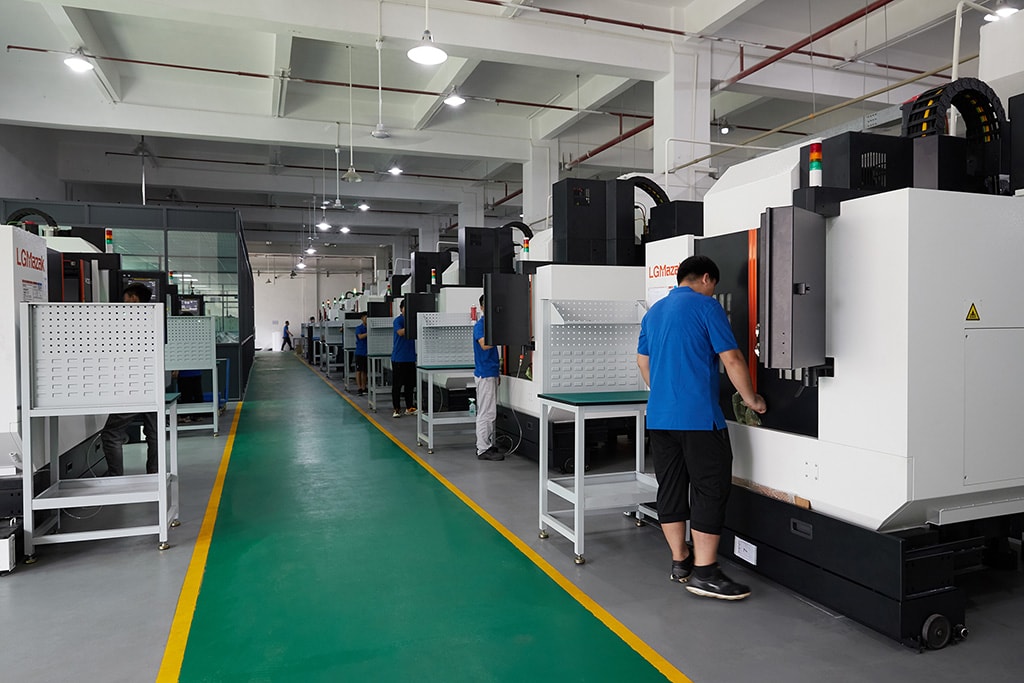
The second verification is the floor. Ask for the machine list and the inspection instruments together, because on a machined part the two are one story: the machines define what can be cut, and the CMMs and surface instruments define what can be proven. Ask for a sample inspection report from a shipped job and a sample material certificate, and read them the way your quality file will read them later. A factory that produces evidence in writing has priced its real capability; one that offers only a brochure has priced a hope. The factory page of this site is the kind of floor story to compare against.
Which certificates should be read before the order?
Read the factory's quality documentation the way an auditor would, before the money moves. ISO 9001:2015 is the baseline; IATF 16949:2016 (product design excluded) and ISO 14001:2015 are additional signals of documentation and process discipline — the factory behind this site holds all three. What matters more than the certificate name is the scope page: a scope that names machining processes at this location is evidence, while a scope covering unrelated activity is decoration. Ask to see the certificates, not a mention of them, and check that the entity on the certificate is the entity you are ordering from.
On a machined part, the certificate story extends to the instruments and the material. Ask whether the measurement equipment is calibrated on a schedule, because an uncalibrated CMM is a very expensive way to be wrong with confidence. Ask how incoming material is verified against its certificate before the stock reaches a machine, because a substituted alloy passes every dimension and fails in service. And ask how the lot is recorded — the heat number, the machine, the program revision, the operator, the inspection results — because the lot record is the chain that protects you later, and it is built as the parts are made or it is not built at all.
The record-retention question belongs in the same pass, because the documents that matter on a machined part are the ones you can still produce years later. Ask how long the factory keeps its certificates, its inspection reports, and its lot records, and in what form, because an aerospace or medical audit can reach back years, and the chain that was not retained is the chain that does not exist. A factory that states its retention policy in the order is a factory that expects its work to be audited; one that cannot say how long it keeps records is a factory that has not been audited yet.
What belongs in the RFQ before any price is discussed?
The RFQ should carry everything the price depends on, so the quote answers the order you intend to place rather than a cheaper one you did not. Include the drawing with its tolerance and finish callouts intact, the material grade and condition, the order and annual quantity, your target date, and your documentation requirements — a material certificate, an inspection report, and the lot records. Then read the reply like a diagnostic. Does the factory ask questions back about datums, critical features, or material verification? Questions are the signature of an engineer planning to make your part; a price with no questions is a price attached to assumptions you never approved.
The RFQ is also where the DFM review happens, and the review is part of the verification. A factory that reads your drawing as an engineer will flag the features where the tolerance is costing money, the finish that forces an extra operation, and the thin wall that will move as the metal releases stress. That review is free engineering and the best predictor of how the factory will treat your order after it is placed. When a factory returns only a number, it is telling you how it quotes; when it returns questions and process comments, it is telling you how it manufactures.
Which quality evidence settles the tolerance and material story?
Before the order, the tolerance claim has to survive one challenge: which instrument measures each critical feature, and what does the evidence look like? A factory that states ±0.003 mm on milling and turning and ±0.002 mm on precision grinding, with Ppk ≥ 1.67 at the initial study on critical characteristics and Cpk ≥ 1.33 on general characteristics. Capability is reported per characteristic: every report names the feature, its tolerance band, the sample size, the sigma method, and the study window., is describing real work; a factory that says only "high precision" has given you nothing to verify. Ask which instrument verifies each feature — a CMM for a bore or a true position callout, a profilometer for a finish — and ask to see a report from a completed job that names its instruments.
The material story belongs in the same evidence pass. Require that the certificate at receiving names the grade and condition from your drawing, carries a heat number, and matches the delivered stock. Where the part is critical enough, require positive material identification at receiving in addition to the paper certificate, because the certificate proves the metal came from a certified heat, while a positive identification proves the stock that reached the machine matches it. Both are verification gates that close before the cutting starts, and both are cheaper than discovering the gap after the lot ships.
What does a first article order verify before the volume?
The first article is the order within the order: a small quantity placed to prove the process before the volume. What it verifies is everything the drawing demands — each critical feature measured on the right instrument with the result reported, the material certificate tied to the lot, and the lot record connecting the part to its heat and its machine. On a machined part, the first article also verifies the finish story: the surface values on the features that slide or seal, measured with a profilometer and reported against the drawing.
Run the first article as a formal gate. Review the inspection report the day it arrives, confirm the material certificate against the grade and condition on the drawing, and check the lot record for the heat number, the machine, and the program revision. A first article that passes this review is a process you can scale; one that fails it is a lesson priced at a few parts rather than a few thousand. And state in the PO which events trigger a new first article — a drawing revision, a change of material source, or a change of process — so the gate protects every subsequent order the same way it protects the first.
Where a program spans several part numbers, batch the first articles into a single gate rather than approving them one by one on different schedules. Ask the factory to machine the first articles together and ship them with their reports together, so you review the whole drawing family against the process in one pass — which catches the cross-part issues — a shared fixture, a common material error — that individual approvals miss. A first article gate that covers the program, not just the part, is the gate that protects the volume.
Which terms should be locked before the PO is issued?
The commercial terms deserve the same verification as the process, because the Incoterm and the payment structure decide who owns each risk. Ask which Incoterm the quote is based on and what the price includes — material, inspection, finishing, packaging, and freight should be named lines, not assumptions. Compare FOB to FOB or DDP to DDP, never a DDP number against an EXW number without adding the freight yourself, and confirm the freight mode and shipping day so the calendar is part of the order.
Payment structure belongs in the same lock. A deposit to cover material with the balance tied to first article approval and inspection milestones is normal on machined work; pressure to pay most of the order before any evidence exists is a signal worth acting on. Lock the documentation package in the PO — what ships with the lot, in which language, and how long the records are retained — and lock the change-control rule: how drawing revisions, material source changes, and process changes are communicated and who approves them. Every term that is locked in the PO is a term that cannot be argued later.
What should the PO and the shipping plan specify?
The PO is the translation of everything verified into enforceable language. It should name the drawing revision, the material grade and condition with its certificate requirement, the tolerance and finish per characteristic as quoted, the inspection and documentation that ships with the lot, the Incoterm and the freight plan, the payment milestones, and the change-control rule. A PO that states these is a contract you can enforce; a PO that says "as quoted" without saying what the quote promised is a contract you will argue about.
The shipping plan belongs with the order because the calendar and the evidence travel together. Confirm the documentation ships with the parts rather than after them, ask for the customs entry documents ahead of the freight booking, and agree the packaging for the part, because a long thin shaft that rubs against its neighbors in transit arrives as scrap regardless of how well it was machined. And keep the verification paperwork from the order — the entity details, the certificate scopes, the quote's stated instruments — because it becomes the baseline for the next order and the reference for any dispute.
Which red flags should stop the order?
Keep a running tally through every stage, and act on it before the PO. Disqualifying red flags include: no verifiable registration number, or one that does not check out; a business scope without machining; certificates that cannot be shown or whose scope does not match; a machine or instrument list that does not exist; a tolerance claim with no measurement story; no engineering questions about your drawing; no stated material-verification process; and pressure to pay most of the order before any evidence exists. Each flag points to a failure mode that will cost you later, and any one of them is enough to stop.
The closing discipline is to let the evidence, not the price, release the order. A quote from a factory that can show its entity, its certificates, its machine and instrument lists, and a sample report is a quote you can act on; a single number from an unknown factory is a gamble wearing a price tag. The order is the moment sourcing becomes real, and the factory that has verified everything with you before the deposit is the factory most likely to deliver what it promised after it, which is what sourcing from China should always come down to.
Keep the verification file with the order, because it is the reference every later order builds on. The entity details, the certificate scopes, the instrument list, the first article report, and the locked terms become the baseline for the next PO, the next negotiation, and any audit that reaches back into the program. Sourcing done once and recorded is sourcing that compounds; sourcing done fresh every order is sourcing that starts from zero every time the factory changes a price.
Frequently Asked Questions
What should I verify before placing a machining order with a China factory?
Verify the registered entity and its scope, the quality certificates and their scopes, the machine and inspection instrument lists, a sample inspection report from a shipped job, the RFQ documentation requirements, the commercial terms, and the first article gate. Each check is a verification gate that protects the order before the money moves.
What belongs in the RFQ before any price is discussed?
The drawing with its tolerance and finish callouts, the material grade and condition, the order and annual quantity, your target date, the documentation you require, and the Incoterm. A factory that receives this and still asks no engineering questions is telling you how it quotes.
What evidence should a factory show before the order?
The machine and instrument lists, a sample CMM or inspection report from a completed job, the material verification process, and the tolerance bands it states — for example ±0.003 mm milling and turning, ±0.002 mm grinding, Ppk ≥ 1.67 at the initial study on critical characteristics and Cpk ≥ 1.33 on general characteristics. Capability is reported per characteristic: every report names the feature, its tolerance band, the sample size, the sigma method, and the study window.
What does a first article order verify?
Everything the drawing demands: each critical feature measured on the right instrument with the result reported, the material certificate tied to the lot, and the lot record connecting the part to its heat and machine. The first article is the qualification gate before volume.
Which terms should be locked before the PO is issued?
The Incoterm, the payment milestones tied to first article approval and inspection, the documentation package, the record retention, the change-control rule, and the freight mode and shipping day. Every term that is locked in the PO is a term that cannot be argued later.
Which red flags should stop an order with a factory?
No verifiable entity or a scope without machining, certificates that cannot be shown or whose scope does not match, a tolerance claim with no measurement story, no engineering questions about your drawing, no material verification process, and pressure to pay before any evidence exists. Any one is enough to stop.
Ready to place an order on verified ground?
Send the drawing and your sourcing questions through the contact page — the response will include the entity details, certificates, machine and instrument lists, and a first article offer, all checkable in writing before any commitment.