
Medical CNC Machining Factory: The Process Discipline a Device Part Demands Before It Ships
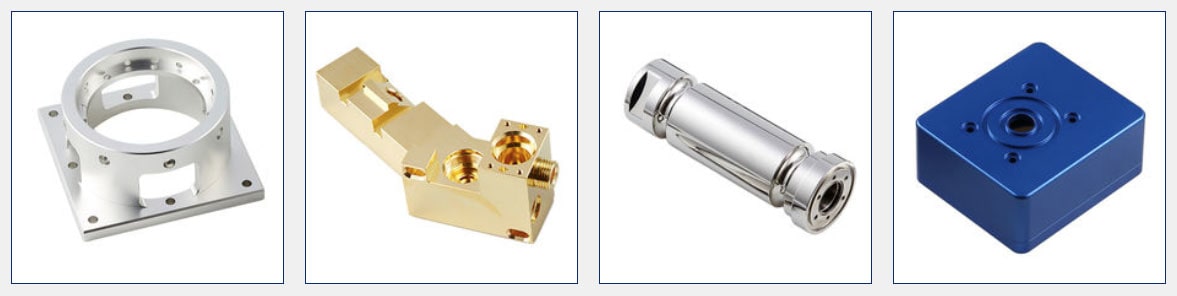
A medical device part does not carry a label saying "medical." What it carries is a drawing that demands more of the factory than most parts ever will: tight tolerances on features that assemble with other components, clean and burr-free edges on surfaces a patient or a clinician may touch, materials whose alloy and batch can be traced to a certificate, and a record that survives the part for years. A medical CNC machining factory is not a separate kind of machine shop — it is a shop that treats those demands as the baseline rather than the exception. This guide is the buyer's view of that floor: what a device part actually requires from the machines, the material control, the finishing, and the record-keeping, and how to verify a factory can deliver it before you send a drawing.
The short answer: audit the factory on the four controls a device part leans on — material identity and traceability, burr and cleanliness control, tolerance and surface evidence, and a record chain that connects all three to one lot. Confirm each with evidence, not adjectives, and confirm the factory states its certifications honestly rather than implying accreditations it does not hold.
Why does a medical part test a factory's process discipline more than its machines?
Any modern machine shop can cut the geometries on a typical medical part — the features are not exotic. The difference between a shop that occasionally runs device work and a factory a device manufacturer can rely on is process discipline: what happens before the cut, around the cut, and after the cut, and whether any of it can be shown on request. A bone screw, a surgical instrument component, or a connector shell fails in ways that are not visible at the machine — a mixed material lot, a burr that breaks off in a body, a surface that traps contamination, a dimension that drifts between lot one and lot five. Those failures are prevented by the factory's systems, and they are caught by its records.
That is why the audit for a medical part is not "show me your cleanest machine." It is "walk me through how a single part moves from bar stock to the box, and show me the evidence at each step." A floor that can do that is running device-grade discipline. One that answers with a brochure has not yet distinguished medical work from the rest of its queue.
Device parts also concentrate risk in ways that other regulated industries do not. An aerospace bracket that fails is replaced; a medical part that fails can interact with a patient, which is why the traceability and process expectations on device work are written into the supply agreement rather than left to the shop's discretion. The practical consequence for a buyer is that a machining factory's suitability for medical work is decided by what it can document — the process, the material record, and the inspection evidence — long before it is decided by what it can cut.
Which materials do medical device parts actually draw from, and what must the factory verify?
Device parts concentrate on a short list of materials that must survive the body, sterilization, or repeated clinical use, and each one makes a demand the factory has to meet:
- Stainless families — 316L and 17-4PH most often. 316L for corrosion resistance and weldability in instruments and implants that touch tissue; 17-4PH where strength and hardness are needed after aging. The factory must verify the grade at intake — 316L is not 304, and the difference is a corrosion story, not a label.
- Titanium — Grade 5 (Ti-6Al-4V). Weight-critical and biocompatible, used for implants and surgical tools. It machines slowly and demands rigid machines and sharp tooling; the factory's titanium experience is part of the capability question.
- Engineering plastics — PEEK and others where a non-metal is specified. Insulators, handles, and components that must not conduct. Plastic machining has its own burr and heat rules, and a factory that lists plastics among its regular materials is a different resource than one that machines metal only.
Whatever the material, the verification rule is the same: the incoming lot is XRF-checked against its mill certificate before it reaches a machine, and the check is recorded. The factory's regular materials — stainless, titanium, aluminum, and engineering plastics — are listed on the services materials table, and the XRF material-control step is documented on the quality page. A buyer should ask for the record on the actual lot, not for a general statement about the material.
Material grade matters more on device parts than on almost anything else a machine shop cuts, because the alloy is frequently the part's entire function. A 316L instrument component exists to resist corrosion through repeated sterilization cycles; a Grade 5 titanium implant exists to carry load at low weight in the body; a PEEK insulator exists to not conduct. When the wrong grade is substituted — and a substituted bar looks identical to the right one on a rack — the failure is not a performance gap, it is a regulatory event. That is why device buyers should treat the factory's material verification as a gating check, not a courtesy: it is the cheapest control in the chain, and it protects the most expensive consequence.
What does "clean and burr-free" really require on the factory floor?
On a drawing, burr control appears as an edge note: break sharp edges, remove burrs, no raised metal. On the factory floor, that note is one of the most demanding operations on a medical part, because a burr on an internal feature is invisible until it fails, and where a device part is involved, "fails" can mean a sharp edge in tissue or a fragment that breaks loose in service.
Burr control is not a cleanup step done at the end by someone with a file. It is engineered into the process: toolpaths that avoid pushing material over an exit edge, cut direction chosen so the tool shears rather than tears, and deburring treated as a real operation with a method and a check. The same discipline applies to cleanliness — a medical part may need to leave the machine free of coolant residue, chips, and embedded debris, which is a process question (washing, drying, handling) and not a hope. When you evaluate a factory, ask how burr-free edges and part cleanliness are achieved and verified, not whether the shop "takes care of it."
How are tolerances and surfaces held and proved for a device part?
Medical drawings are not necessarily tighter than aerospace or automotive drawings, but the features that matter are usually called out with intent, and the factory must prove it held them across the run, not just on the first piece. On the floor behind this site, the working precision is ±0.003 mm for CNC milling and turning and ±0.002 mm for precision grinding, verified on in-house Hexagon CMMs, with key characteristics charted to Ppk ≥ 1.67 initial. Surface finish on functional faces is measured, not guessed, and inspection runs at a controlled reference temperature so the numbers describe the part as it will be at assembly.
For a device part, the evidence takes a specific shape: a dimensional report with measured values against the drawing for the features that matter, SPC showing the process stayed centered across the batch, and — where the drawing calls for it — surface-finish readings and edge-condition checks. "Passed" on a report is not evidence; a measured value is. That distinction is the difference between a supplier you can audit and one you are trusting.
What should the traceability record contain when a part is headed for a device?
Device work makes traceability a design requirement rather than an administrative nicety, because if a component issue ever surfaces, the manufacturer needs to know exactly which lot of material, which machine, which operator, and which inspection results produced the affected parts. The factory's integrated MES/ERP system records those points on every lot — material source and usage, process parameters, machine data, batch, operator, and inspection results — so the chain can be pulled up on demand rather than reconstructed after a request.
The three-level distinction matters here exactly as it does on any precision order. The heat is the material unit named on the mill certificate; the batch is the production run sharing one setup and one set of process parameters; the lot is what ships and is traced. When a record conflates the three, a recall cannot be answered. A buyer should ask the factory to show the record on one real lot — the certificate, the XRF read, the machine and operator, and the dimensional report, all tied to the same lot number — before committing production volume.
Documentation has a shelf life on device work that other industries rarely demand. A manufacturer may need to answer a supplier question two years after a part shipped, so the record has to survive the program, not just the shipment. Ask what the factory keeps, in what form, and for how long — a factory whose lot records live in a retrievable system rather than a paper folder is built for that conversation; one that treats documentation as a delivery-day chore will struggle when the question arrives late.
Which certifications can a machining factory honestly show a medical buyer?
Certification language is where medical sourcing conversations most often go wrong, and a factory that states its scope honestly is behaving like one a device manufacturer can work with. The floor behind this site holds ISO 9001:2015 (No. 116024/A/0001/UK/En), IATF 16949:2016 (product design excluded) (No. 131941/A/0001/SM/En), and ISO 14001:2015 (No. 116024/B/0001/UK/En) — the quality, automotive, and environmental systems a build-to-print operation runs, verifiable by number with the registrar. It does not hold ISO 13485 or FDA registration, and it does not claim them. For a device component sourced under the device manufacturer's own quality system — where the manufacturer holds the regulatory responsibility — the machining supplier's job is to deliver the material, tolerance, and traceability evidence the manufacturer's system requires, and to be honest about what its certificates do and do not cover.
Ask a factory what it is certified for, read the scope, and verify the numbers with the registrar. A supplier that volunteers its scope — including what it does not hold — is easier to audit than one that lets "quality certified" float without specifics.
Which questions should a device manufacturer put to a machining factory before the PO?
The questions that screen a factory for medical-grade work are the ones that test process discipline and honesty, not the ones that test the sales page:
- How is the material on my part verified at intake? XRF against the certificate, recorded per lot — for 316L or Grade 5 titanium, the alloy identity is the part's safety story.
- How are burr and edge condition controlled and verified? The answer should name toolpaths, deburring methods, and a check, not a promise to "clean it up."
- What does the tolerance evidence look like? Measured values against the drawing on a CMM report, SPC where characteristics are critical, and finish readings where the drawing calls for them.
- Can you show the record on one real lot? The certificate, XRF read, machine, operator, and dimensional report tied to the same lot number, produced on demand.
- What are you certified for, and what are you not? Certificate numbers, scope, and an honest statement of what is outside the scope, verified with the registrar.
- What are the lead time and MOQ for a device part? One-piece orders and the roughly 3 / 7 / 30-day lead-time tiers that apply to complex parts keep early validation affordable.
Send these questions before you send the drawing. A factory that answers with records, instrument names, and an honest scope is running the discipline a device part depends on; one that answers with assurances is asking you to be its quality department.
Frequently Asked Questions
What materials do you machine for medical device parts?
We machine 316L and 17-4PH stainless, Grade 5 titanium, and engineering plastics such as PEEK as part of a regular material program, alongside aluminum, alloy steel, brass, and copper. Every incoming lot is XRF-verified against its mill certificate before it reaches a machine.
What tolerances can medical device parts hold?
We hold ±0.003 mm on CNC milling and turning and ±0.002 mm on precision grinding, verified on in-house Hexagon CMMs, with key characteristics charted to Ppk ≥ 1.67 initial. Surface finish and edge condition on functional features are measured and reported.
Are you ISO 13485 or FDA certified?
No. We hold ISO 9001:2015 (No. 116024/A/0001/UK/En), IATF 16949:2016 (product design excluded) (No. 131941/A/0001/SM/En), and ISO 14001:2015 (No. 116024/B/0001/UK/En), and we state that scope plainly. For device components sourced under a device manufacturer's own quality system, our role is to deliver the material, tolerance, and traceability evidence that system requires, not to claim a medical certification we do not hold.
How do I verify the alloy in the parts I receive?
By the lot record: the mill certificate names the alloy, an XRF check at intake verifies the actual stock against the certificate, and the batch identity ties the finished parts back to that lot. Dimensional inspection cannot see chemistry, so the material record is the only proof.
Can you machine a single medical prototype before production?
Yes — the MOQ is one piece. A single-part order runs on the same machines, tolerances, and documentation as production, so the prototype and its first-article report are a true preview of the production lot rather than a separate, looser process.
How are burrs and sharp edges controlled on device parts?
Burr control is engineered into the process — toolpaths chosen to avoid pushing material over exit edges, deburring treated as a real operation, and edge condition checked on functional features. Cleanliness is handled the same way: as a process with a method and verification, not as a hope.
What is the lead time for medical device parts?
Lead times run roughly 3, 7, or 30 days depending on part complexity and process steps — simple parts ship in about 3 days, while parts with surface finishing or many operations fall into the 30-day tier. The factory quotes the tier honestly at the RFQ stage rather than discovering it mid-order.
Putting a device part out to a factory and want the evidence to prove it?
Send the drawing with the material, the critical features, and the documentation requirements marked, and we will return a quote with the process, the inspection scope, and the record package spelled out. Email [email protected] or call +86 13126536955.