
Stainless Steel CNC Machining Factory: The Rigidity, Cutting Discipline, and Grade Control Behind a Corrosion-Resistant Part
Stainless steel is ordered for one reason that overrides every other: the part has to survive an environment that would eat a lesser metal. That promise is made at the mill, in the alloy's chromium and molybdenum, but it is kept on the factory floor — in the rigidity of the machine that cuts the part, the discipline that stops the work-hardening from ruining both tool and surface, and the material verification that proves the bar was what the certificate said. A stainless steel CNC machining factory therefore earns its name not by listing the grade on a materials page but by controlling the metal's behavior through every operation. This guide is the buyer's audit of that floor: which stainless families actually belong on a drawing, what work-hardening does to a cut, how to read a machine list for stainless, how the grade is verified at intake, and what the shipped file must contain before you release repeat volume.
The short answer: audit the factory on stainless-specific lines before you send the drawing. Confirm it runs your grade routinely with machines rigid enough to cut it without dwell, that it verifies the incoming alloy against the certificate rather than trusting the bar's label, that it controls heat so the tolerance survives the cut, and that it can show the batch record tying material, machine, and measurement together. On each line, ask for the evidence, not the adjective.
Why does stainless steel test a factory's machine tools rather than its brochure?
Most metals punish a factory for being careless. Stainless steel punishes a factory for being weak, and the weakness shows up before the first part is finished. The austenitic grades, 304 and 316, work-harden: the surface of the cut hardens under the tool, so a cutter that dwells, rubs, or takes a timid pass on already-hardened metal meets steel that is no longer cutting like steel. The result is a ruined edge, a galled surface, and a tool that dies young — all invisible until the first part fails inspection.
That single behavior reframes the factory audit. The question for stainless is not "can you machine it?" It is whether the floor is set up to cut it the way the metal demands: rigid machines that take a real depth of cut without vibration, sharp tooling with the right geometry, and feeds that keep the tool moving through fresh metal rather than rubbing against hardened surface. A job shop that cuts aluminum all week and accepts a stainless order "because we have a spindle" is not a stainless factory — it is a factory about to learn the difference on your part.
Which stainless families should a factory actually run, and what does each demand?
Stainless steel is a family name, not a material, and the grades divide by both corrosion behavior and cutting behavior. The floor behind this site lists the stainless it runs routinely as 303, 304, 316, 316L, and 17-4PH — the same materials table on the services page a buyer can check before sending a drawing. Each family makes a different demand on the factory:
- 303 — the free-machining grade. Sulfur is added to break chips and protect tools, which makes 303 the economical choice for high-volume stainless parts — fittings, fasteners, valve stems. The trade-off is slightly lower corrosion resistance than 304, which matters only where the environment is aggressive.
- 304 — the general-purpose austenitic grade. The default for corrosion-resistant parts that do not face chlorides or marine exposure. It work-hardens, so the factory must cut it with sharp tooling and steady feed rather than letting the cutter dwell.
- 316 and 316L — the chloride-resistant grades. Molybdenum is added for marine and chemical environments. 316L is the low-carbon version, preferred where welding or sustained temperature could otherwise drop chromium carbide and weaken corrosion resistance. On the floor, both machine like 304 but demand tighter chip control.
- 17-4PH — the precipitation-hardening grade. Delivers high strength plus corrosion resistance for shafts, aerospace fittings, and valve parts. It is usually machined in the softer condition and aged afterward, which means the factory needs a heat-treatment partner and a hardness check, not just a spindle.
The buyer's discipline is to name the grade with its full meaning — 316L, not "stainless" — because the letter changes the alloy's behavior and its price. A drawing that says "stainless steel" invites the cheapest bar on the rack; one that says 316L fixes the corrosion story and the floor's job in a single line.
What does work-hardening actually do to a cut, and which machine controls stop it?
Work-hardening is the reason stainless cannot be machined like mild steel, and understanding it tells a buyer which factory controls to inspect. When the cutter presses into austenitic stainless, the metal beneath the tool deforms and hardens. If the tool keeps cutting through that zone — a real depth of cut, a steady feed, a sharp edge — the hardening is a minor effect. If the tool dwells, rubs, or takes a spring pass, it meets the hardened layer repeatedly, generates heat, and accelerates its own wear until the edge breaks down and the surface tears.
Three floor controls manage that behavior, and a buyer can ask about all three:
- Machine rigidity. A rigid spindle and stable fixturing let the shop take a proper depth of cut without chatter. On stainless, the machine that flexes is the machine that rubs, and rubbing is where work-hardening wins.
- Tooling and geometry. Sharp inserts with positive geometry and the right grade for stainless keep the cut shearing instead of smearing. Dull tooling is the most common cause of a stainless surface that looks rough and measures worse.
- Feeds and coolant. The tool must advance steadily enough to stay ahead of the hardened zone, with coolant reaching the cut to carry off the heat. The site's own materials table says it plainly: stainless demands low speeds, sharp edges, and coolant.
A factory that answers these three with machine names, tooling choices, and cutting parameters is running stainless as a discipline. One that answers "we have CNC machines" has not yet distinguished stainless from the metal it cut last week.
How do you read a factory's machine list for a stainless part?
The machine list is the first page of a stainless factory's resume, because stainless selects machines by rigidity and spindle capability, not by axis count alone. The fleet behind this site spans 100+ production machines — 3-axis, 4-axis, and 5-axis milling centers from Brother and Mazak, 25+ turning centers including Swiss-type machines, and 7+ precision grinders — with the full breakdown on the factory overview page.
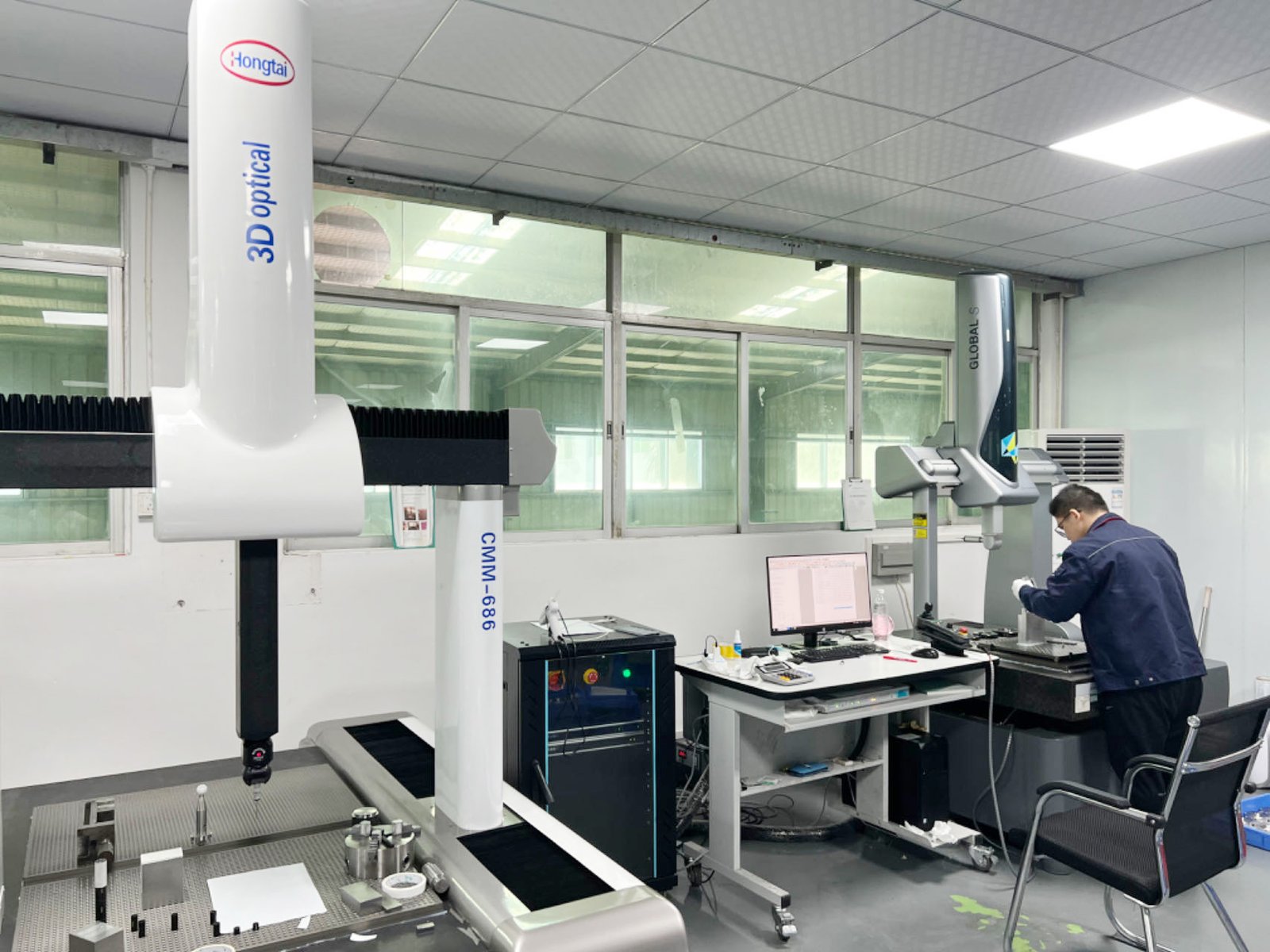
For stainless, read the list for what it says about rigidity and control. A BT40-class vertical machining center takes heavier cuts in stainless than a light high-speed spindle built for aluminum; a lathe with sufficient torque turns a 316 shaft without stalling mid-cut; Swiss-type machines hold long, thin stainless diameters by supporting the bar close to the cut. The useful question is not "how many machines do you have" but "which machine runs my stainless part, and why that one?" A floor that answers with a machine and a reason has matched the metal to the tool; one that answers with a calendar has not thought about the material at all.
How is the stainless grade verified before it reaches the machine?
The corrosion promise of a stainless part lives entirely in its alloy, which is why material verification is the first gate on any stainless order. The bar arrives with a mill certificate naming the grade and its composition; the certificate is a claim. The verification is a measurement on the actual stock — an XRF read that confirms the alloying elements before the metal is cut.
XRF matters on stainless for a specific reason: it distinguishes grades that look identical on a rack. The chromium and nickel that make 304 and 316 both "stainless" read differently, and the molybdenum that separates 316 from 304 is exactly the element that makes 316 the right choice in a chloride environment. A shop that verifies every incoming lot against its certificate — the material-control step documented on the quality system page for the floor behind this site — catches a substituted or mixed lot before it can become a part that corrodes where it must not. Ask for the XRF record tied to the lot number, and the material gate on a stainless order is closed.
How is heat controlled so the tolerance survives the cut?
Stainless retains heat in the cut zone far more than carbon steel, because its thermal conductivity is low — the heat stays where the tool meets the metal instead of conducting away through the workpiece. That heat does two things a buyer should care about: it accelerates tool wear, and it moves the part. A stainless part that grows during machining and cools after the cut will not hold the tolerance it was cut to unless the process accounts for the thermal cycle.
The factory-side answer is control: coolant delivered to the cut rather than sprayed at the general area, feeds that keep the tool moving instead of dwelling in one spot, and measurement that happens at a controlled reference temperature rather than on a part still warm from machining. The result is measured, not assumed. On the floor behind this site the working precision is ±0.003 mm for CNC milling and turning and ±0.002 mm for precision grinding, verified on in-house Hexagon CMMs, and key characteristics are charted to Ppk ≥ 1.67 initial. Ask for the dimensional report with measured values and the temperature context behind them — on stainless, the number that counts is the one taken after the part has stopped moving.
Which finishing and post-machining steps protect the corrosion story?
Machining changes the surface that the alloy's corrosion resistance depends on. Cutting can embed free iron from tooling into the surface, and a stainless part that leaves the machine with embedded iron will rust where the passive layer is compromised, which is why the finish specification on a stainless drawing is a functional requirement, not a cosmetic one.
The protective steps are well established: passivation removes embedded iron and restores the chromium-rich passive layer, and it is specified for parts that must survive corrosion service. Where the drawing calls for it — for example passivation per ASTM A967 on a 316 part — the factory should treat it as a documented process step with the record flowing back into the lot file, not as an offhand "we'll clean it." Plating, brushing, and mirror polishing are available as bundled secondary operations through the same disclosed-partner model the services page describes for finishing and heat treatment, and each should appear in the batch record so the surface story is as traceable as the alloy story.
What should the lot file contain when stainless parts ship?
The shipment file is where the stainless order proves itself, and it should tie four things to one lot number:
- The mill certificate for the actual heat — grade, composition, and the standard it was produced to.
- The XRF verification record — the intake read that matched the incoming stock to its certificate, dated and tied to the lot.
- The dimensional evidence — CMM reports with measured values against the drawing, taken at a controlled reference temperature, with SPC where key characteristics are charted.
- The finish and process record — passivation or other surface treatment, heat treatment such as aging for 17-4PH, and the hardness or test evidence that confirms the condition.
Every document in the set should carry the same lot number and point at the same drawing revision, so the file is about your order rather than a general capability statement. A package that cannot be pinned to a specific lot is marketing material; one that lines up to a lot number is evidence a recall or a warranty claim can actually use.
Which questions should you put to a stainless machining factory before the PO?
The questions that screen a serious stainless CNC machining factory are the ones that test the floor's control over the metal, not its sales page:
- Which stainless grades do you run, and is mine among them? The answer should name 303, 304, 316, 316L, or 17-4PH, not "we do stainless."
- Which machine runs my part, and why that one? The answer should connect your part's geometry and quantity to a specific machine's rigidity and spindle — the metal-to-tool match is where stainless is won.
- How do you manage work-hardening on 304 or 316? The answer should mention depth of cut, feed, tooling geometry, and coolant, not a shrug.
- How is the incoming alloy verified? XRF against the certificate, recorded per lot — the same material-control step the quality page documents.
- How is heat controlled so tolerances hold? Coolant at the cut, feeds that avoid dwell, and measurement at a controlled temperature are the marks of a stainless-aware process.
- What finish and process records ship with the parts? Passivation or plating documentation, heat-treatment and hardness evidence where required — named as deliverables, not favors.
Send these by email before you send the drawing. A factory that answers with machines, instruments, and process detail is running the system your stainless part depends on; one that answers with assurances is asking you to be its quality department.
Frequently Asked Questions
Which stainless steel grades do you machine?
We machine 303, 304, 316, 316L, and 17-4PH as part of a regular stainless program, alongside aluminum, alloy steel, brass, copper, titanium, and engineering plastics. Every incoming stainless lot is XRF-verified against its mill certificate before it reaches a machine.
Why does stainless steel work-harden during machining?
The austenitic grades — 304 and 316 — harden at the surface where the tool cuts. If the cutter dwells or rubs instead of taking a clean, steady cut, it meets that hardened layer, generates heat, and wears rapidly. Rigid machines, sharp tooling, proper depth of cut, and steady feed keep the tool ahead of the hardening instead of fighting it.
What is the difference between 304 and 316 for machined parts?
316 adds molybdenum, which gives it resistance to chlorides and marine environments that 304 lacks. Both machine similarly and work-harden the same way; the grade choice is driven by the service environment, and the molybdenum is exactly what an XRF check confirms at material intake.
What tolerances can stainless steel CNC machining hold?
We hold ±0.003 mm on CNC milling and turning and ±0.002 mm on precision grinding, verified on Hexagon CMMs, with key characteristics charted to Ppk ≥ 1.67 initial. Because stainless retains heat in the cut, inspection runs at a controlled reference temperature — the numbers then describe the part as it will be in service, not as it was warm off the machine.
Do stainless steel parts need passivation after machining?
Where the drawing specifies it — for example passivation per ASTM A967 on a 316 part — yes, because machining can embed free iron into the surface and compromise the passive layer. Passivation removes that iron and restores corrosion resistance, and on a traceable order it is a documented step in the lot record, not an afterthought.
What is the minimum order quantity for stainless steel parts?
One piece. A single-part stainless order is the cheapest way to test the three things that matter — the material record, the machining discipline, and the dimensional evidence — before you commit a production batch to the same process.
Which certifications does the factory hold?
Dongguan Zhuohang Ltd holds ISO 9001:2015 (No. 116024/A/0001/UK/En), IATF 16949:2016 (product design excluded) (No. 131941/A/0001/SM/En), and ISO 14001:2015 (No. 116024/B/0001/UK/En). The IATF scope is build-to-print, and the certificates are verifiable by number with the registrar rather than by logo.
Putting a stainless drawing out to a factory and want the material record to prove it?
Send the drawing with the grade and the surface treatment marked, and we will return a quote with the machine, the process, and the documentation package spelled out. Email [email protected] or call +86 13126536955.